SPACE INTELLIGENCE · PROFILING & OPTIMISATION
Profiling & optimisation: a building that learns habits
SPACE Intelligence learns, with consent, when people arrive, what they prefer and what they order regularly. It uses that to order on their behalf within set limits, to suggest what they actually need and to run heating, cooling, ventilation and shading on real use instead of fixed timers.
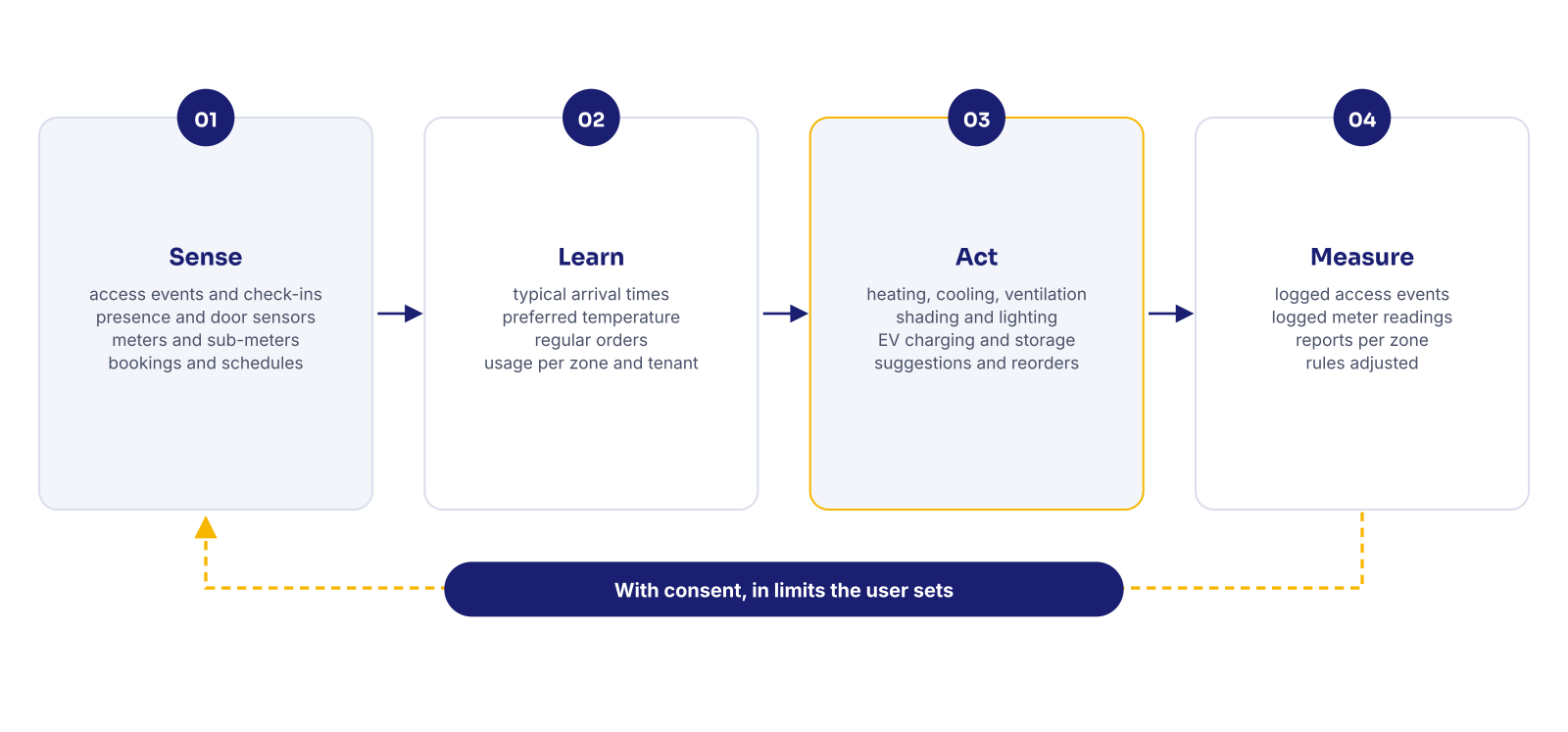
The building already records access events, presence, meter readings and bookings. SPACE Intelligence turns them into patterns and rules, acts on them and logs the result, so every change can be checked.
AI agents that shop on the user’s behalf
Agentic commerce, AI agents that find, order and pay for goods and services for their users, is one of the strongest trends in payments and retail. SPACE Intelligence gives such an agent what a browser does not have: the room, the stay, the user’s role and a secure way to confirm and pay at the door.
- Standing orders: breakfast every morning at 7:30, water and coffee refilled, laundry picked up on Mondays
- Replenishment: groceries and household items reordered to the door when they usually run out
- Limits and approvals: per order, per day or per stay; anything above the limit waits for one tap
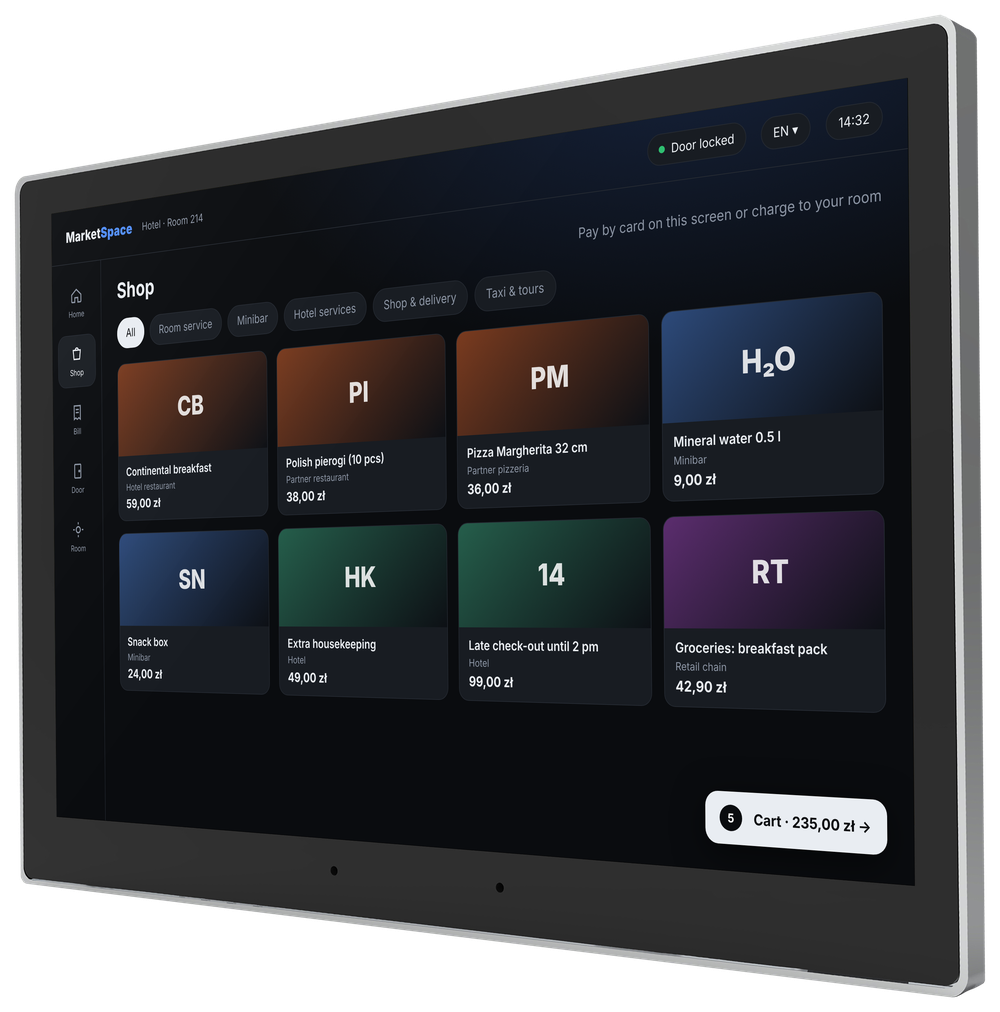
- Every agent order lands in the same MarketSpace catalogue, order engine and ledger as orders placed by hand
Habits and needs, turned into a better stay
With consent, the system remembers what makes a person comfortable and what they need, and applies it next time without being asked.
- Preferred temperature, lighting scene and language set before arrival
- Suggestions that fit the time and the person: breakfast before an early check-out, a taxi before a flight
- No offers in sensitive contexts, such as hospital rooms; operators decide where suggestions appear
- Usage and spending insights for residents and tenants: energy per flat or tenant area, regular orders, monthly bills
Passive energy management
Comfort where people are, economy where they are not. The building uses what it already knows about occupancy, bookings and schedules to run its systems with nobody pressing a button.
Occupancy from access events
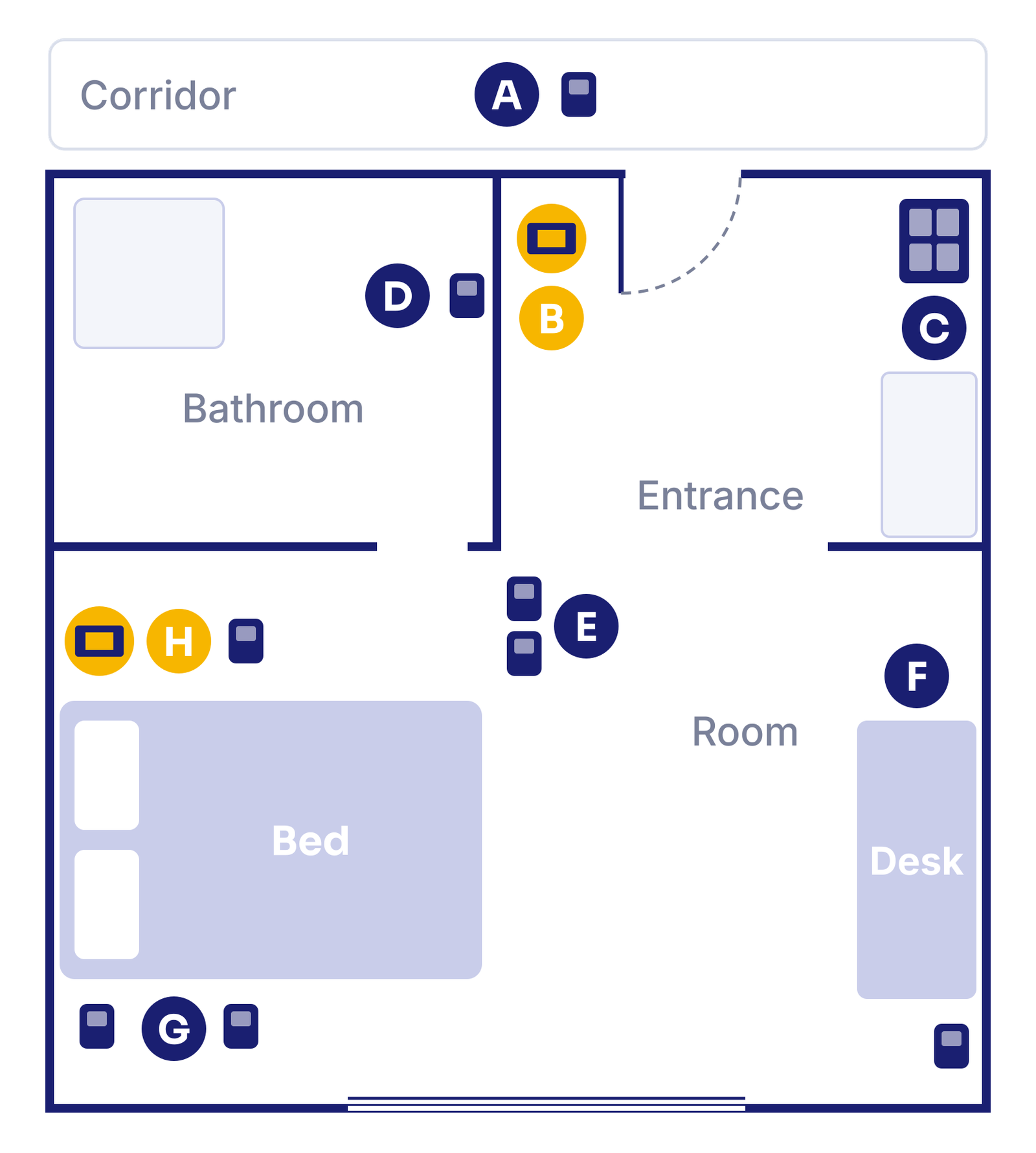
Entries, exits, check-ins and room keys show which floors, offices and rooms are in use right now, together with presence and door sensors.
Economy mode for empty zones
When a zone is empty, heating, cooling and lighting go to setback; the first badge-in brings comfort mode back.
Ready before arrival
A booked room or meeting room is heated or cooled shortly before the guest arrives, using the arrival times the system has learned, instead of all day.
Ventilation on demand
Ventilation follows occupancy and schedules per zone; window sensors raise an alert for an open window, and a rule can pause heating or cooling in that room.
Shading by schedule and use
Where motorised blinds or façade shading are installed, they are driven by schedules and occupancy as part of the same rules.
Charging and storage on schedule
EV charging and battery storage are planned around building load and solar production, using self-generated energy first.
Measured, not estimated
Access events and meter readings are logged, so the effect of each rule can be checked zone by zone and tenant by tenant. Actual savings depend on the building, its systems, its use and the climate, so we do not promise a number in advance.
Privacy by design
Profiling only makes sense if people trust it. These are the design principles behind every profiling and optimisation function.
Consent first
Profiling and personal suggestions are switched on only with the user’s consent. Without consent the building runs on general rules and schedules.
Opt out at any time
The user can withdraw consent, switch off suggestions or delete preferences, and the system falls back to the building defaults.
Local where possible
Designed to process data on the Space Engine Edge server in the building wherever possible, so occupancy and habit data stay on site.
GDPR as the baseline
Built around GDPR principles: a clear purpose, data minimisation, retention limits and the user’s right to access and erase data.
Rules, schedules and suggestions are configurable functions of the SPACE platform. Which ones are switched on is decided by the building operator and, for personal preferences, by each user.
Let your building learn how it is used
Send us the building type, the installed heating, cooling and ventilation and the access system. We will propose the rules, the trial zone and the data we will measure.
Phone: +48 533 909 533